
You can buy an LLC online, but the website listing and electronic signature do not make the entity clean or useful. An existing LLC can carry debts, tax exposure, lawsuits, contracts, liens, compliance failures, and a disputed ownership history. A shelf LLC may have been formed earlier and held inactive, yet its age does not create business credit, operating history, licenses, or lender approval. Verify the entity, seller, operating agreement, tax record, liens, and transfer approvals before paying.
Key Takeaways
- Buying an LLC online usually means buying membership interests in the existing legal entity, not merely purchasing a name or filing.
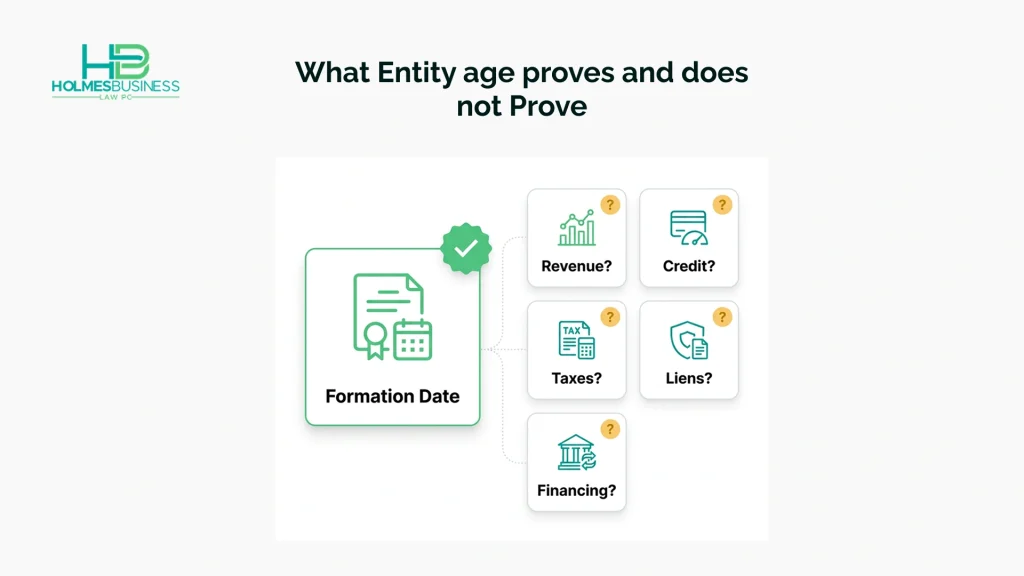
- A shelf LLC’s formation date does not prove revenue, creditworthiness, clean tax history, or eligibility for financing.
- Pennsylvania law can separate economic rights from management and information rights when admission requirements are not completed.
- A Pennsylvania subsistence certificate confirms state-record existence but does not establish ownership or freedom from liens.
- Require seller identity checks, ownership evidence, member approval, lien releases, tax review, and control-transfer documents before funds move.
- Do not claim the entity has an older operating history when it was dormant or recently acquired.
What Does It Mean to Buy an LLC Online?
The transaction normally transfers ownership interests in an existing entity. The LLC remains the same company before and after closing. Its tax accounts, contracts, debts, claims, filings, and operating record stay with it unless resolved or changed through separate steps.
An online marketplace may help the buyer find a seller, exchange documents, or pay. It does not replace legal diligence. Start with Holmes Law’s guide on how to purchase an existing LLC once that article is published, or use the broader business acquisition process until then.
Confirm whether the seller offers all membership interests, only an economic interest, selected assets, or a service that forms a new entity. Those are different transactions.
What Is a Shelf LLC?
A shelf LLC is generally an entity formed earlier and held for later transfer. Sellers may market the older formation date as faster or more credible. The buyer should separate legitimate administrative convenience from unsupported claims about credit, financing, contracts, or operational age.
Ask for every document and activity since formation: bank statements, tax filings, invoices, contracts, annual reports, registered-office records, beneficial owners, prior members, and dissolution or reinstatement records. If the seller says the entity never operated, the evidence should support that statement.
A dormant entity can still incur annual filing fees, registered-agent charges, tax obligations, identity misuse, or unauthorized activity. “Never used” should be a representation in the agreement, backed by a remedy.
Why Is Entity Age Not the Same as Business History?
The filing date proves when the entity was created, not what it accomplished. It does not show sales, employees, customer relationships, profitable operations, or repayment history. A buyer should not represent to a bank, customer, insurer, or government agency that the business operated for years if only the legal shell existed.
Age also does not guarantee faster access to credit. Lenders and counterparties can examine ownership changes, financial statements, guarantors, tax returns, and actual operating history. Marketing that implies an old filing date automatically creates creditworthiness should be treated cautiously.
Use the Pennsylvania Department of State business services to obtain available entity records, filings, and a subsistence certificate. The state record is one part of diligence, not a commercial endorsement.
What Should You Verify About the Seller?
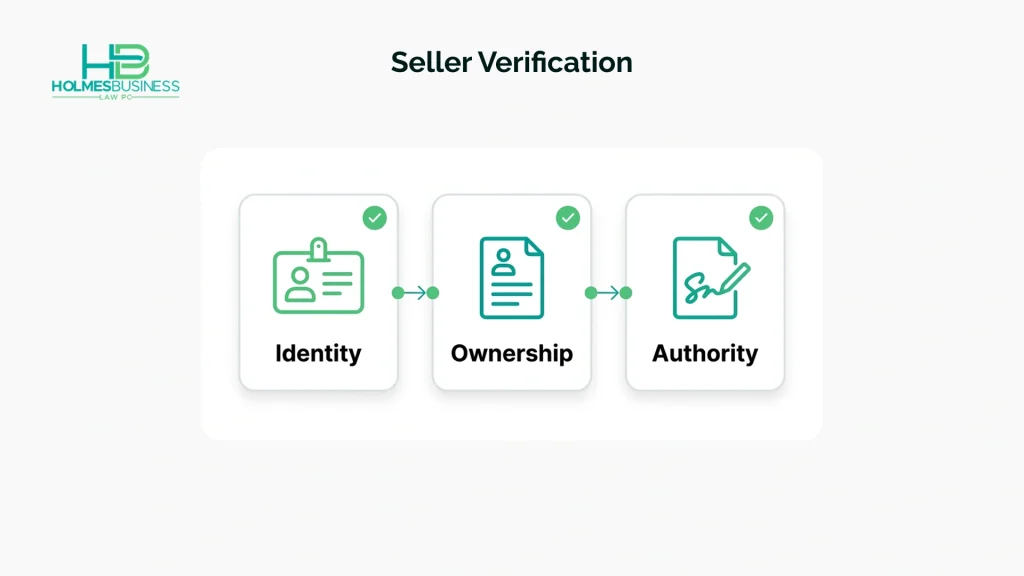
The seller must prove identity, ownership, and authority to transfer the interests. Request government identification through a secure process, formation documents, the full operating agreement, member ledger, acquisition documents, tax records, consents, and any certificates representing interests.
Compare names and ownership percentages across the operating agreement, tax returns, bank resolutions, and seller representations. Investigate whether another member has a right of first refusal, approval right, option, or claim to the interest.
Do not send funds to an unrelated account or rely on a marketplace profile. Use a signed purchase agreement, verified payment instructions, and escrow where appropriate.
Which Liabilities Can Stay With the LLC?
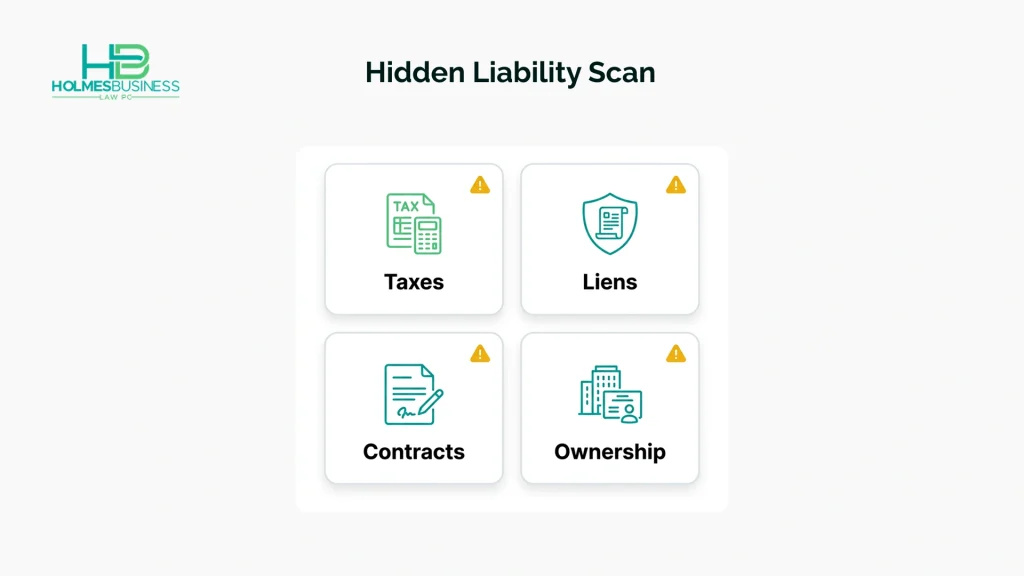
Pre-closing liabilities remain inside the LLC after its ownership changes. Review taxes, debt, UCC filings, judgments, lawsuits, payroll, vendor balances, customer claims, chargebacks, data incidents, licenses, and contracts.
The Pennsylvania business and UCC search tools can identify state records and financing statements. Match each filing with payoff and termination documentation. Obtain federal, state, and local tax records and ask the seller to disclose notices, audits, payment plans, and unfiled returns.
Use a risk table:
| Finding | Why It Matters | Closing Response |
| Ownership mismatch | Seller may lack authority | Correct records and obtain approvals |
| Active UCC filing | Assets may secure a debt | Payoff and termination commitment |
| Missing tax returns | Exposure remains in entity | File, obtain advice, escrow or walk away |
| Key contract restriction | Control change may trigger termination | Written consent before closing |
| No proof of dormancy | Hidden activity may exist | Expanded records, representation, indemnity |
How Do Pennsylvania Transfer Rules Affect Control?
An assignment may transfer economics without admitting the buyer as a member. Pennsylvania’s LLC provisions distinguish a transferable interest from management and information rights. Review 15 Pa.C.S. §§ 8841, 8851, and 8852 with the operating agreement.
The closing should address transfer restrictions, required member consent, waiver of rights of first refusal, admission of the buyer, updated ownership records, and a new or amended operating agreement. Without that sequence, the buyer may pay for an interest without receiving expected control.
What Documents Should Be Required?
Use documents that prove both the sale and the control change. Common items include:
- Membership-interest purchase agreement.
- Disclosure schedules.
- Assignment of membership interests.
- Member and manager approvals.
- Waivers of transfer restrictions.
- Amended operating agreement and member ledger.
- Manager resignations and appointments.
- Tax representations and record delivery.
- Payoff letters, lien releases, and UCC termination commitments.
- Banking, domain, email, accounting, and registered-office control changes.
If the IRS responsible party changes, Form 8822-B generally requires notice within 60 days. Whether a new EIN is needed depends on tax classification and the actual transaction.
When Is Forming a New LLC Safer?
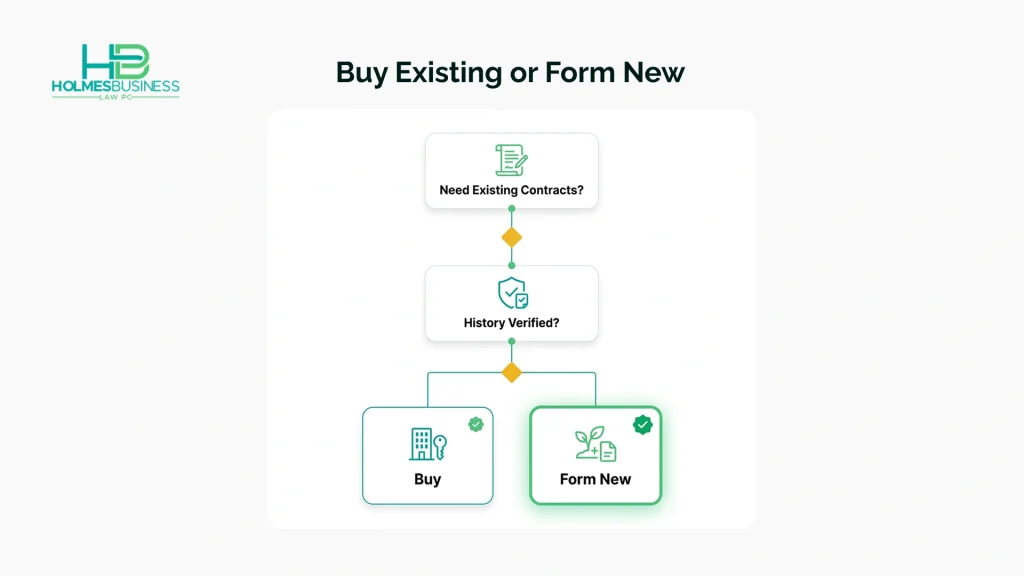
A new entity is often safer when the buyer does not need the old company’s contracts, licenses, or operating continuity. Formation avoids inheriting an unknown entity history, although a new buyer still needs proper contracts, tax registrations, licenses, banking, and insurance.
Buying an existing LLC may make sense when verified contracts, permits, assets, or business operations justify keeping the entity intact. A shelf LLC whose main feature is its date may offer little value compared with a clean new formation.
Holmes Law’s business formation service can be compared with acquisition counsel before choosing between a new entity and an existing one.
FAQs
Yes, but the transfer must comply with the operating agreement, ownership approvals, applicable law, and required third-party consents.
No. A shelf LLC may have an older filing date without revenue, customers, employees, credit, or operating history.
No. Credit decisions can depend on current ownership, financial performance, guarantors, repayment history, and lender rules.
Yes. Debt, taxes, judgments, contractual claims, and secured obligations can remain with the entity after ownership changes.
No. It confirms state-record status, not the seller’s ownership or the absence of liens and disputes.
The answer depends on federal tax classification and the transaction. Confirm with a tax professional and update the responsible party when required.
Verify seller identity, ownership, entity records, bank instructions, contracts, tax history, and escrow arrangements before paying.
Forming a new LLC may be preferable when the existing entity offers no verified operational asset or contract worth preserving.
Conclusion
Treat the online listing as a lead, not evidence. Verify the entity’s history, the seller’s authority, transfer restrictions, taxes, liens, contracts, and the buyer’s admission as a member. If the only promised benefit is an older filing date, compare that price and risk with forming a clean new LLC. Have the purchase agreement and operating records reviewed before sending nonrefundable funds.