


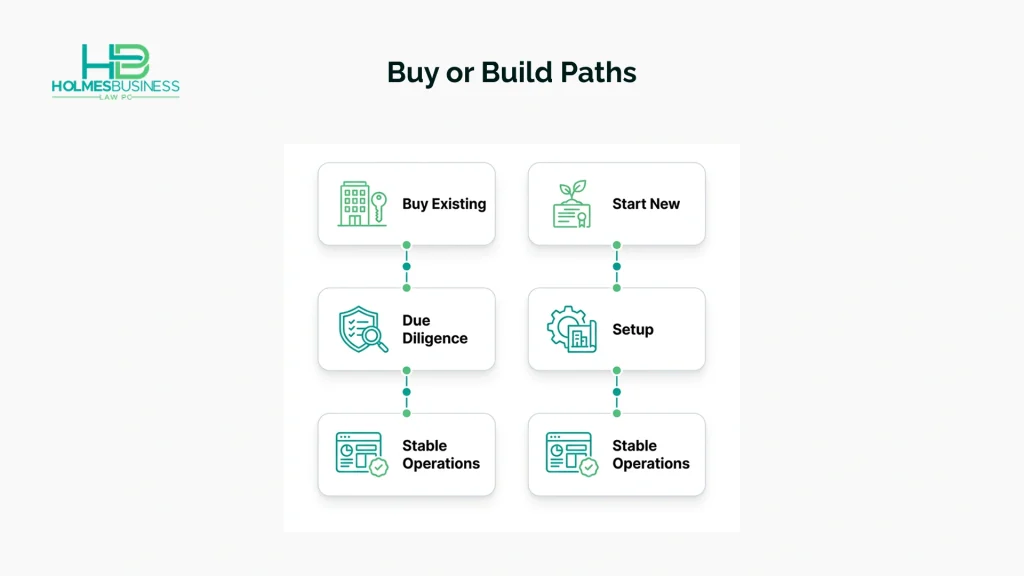
Buying an operating company can give you customers, employees, systems, and revenue on day one. Starting from zero gives you a clean entity and more control, but no proven demand. The better choice depends on whether the existing business’s transferable value exceeds its price and inherited risk. Before you buy an existing business, verify earnings, contracts, ownership, liabilities, licenses, and the cost of replacing anything that will not survive closing.
Key Takeaways
- Buying can shorten the path to revenue, but only when customers, employees, leases, licenses, and supplier relationships remain after closing.
- Starting a new company provides a cleaner history and greater control, but the founder must build demand, systems, staff, and vendor terms.
- An asset purchase and an ownership-interest purchase carry different transfer work and historical liability exposure.
- A low purchase price may be expensive if the buyer must replace equipment, rebrand, obtain a new lease, or rebuild customer acquisition.
- Verify cash flow and transferability before giving an existing company credit for “turnkey” value.
- Compare both options using total capital required, time to stable operations, and downside exposure, not price alone.
What Are You Really Comparing?
Compare two operating plans, not an acquisition price with a filing fee. Buying requires purchase funds, diligence, legal and accounting work, financing, working capital, and post-closing investment. Starting requires formation, product development, hiring, marketing, licenses, insurance, systems, lease costs, and enough cash to survive before revenue stabilizes.
Build a 12-to-24-month cash plan for both options. Include replacement costs for assets or relationships that will not transfer. Then compare time, control, risk, and capital.
The business valuation process helps test whether the target’s earnings and assets support the asking price.
What Advantages Can an Existing Business Offer?
A verified operating system can reduce the time and uncertainty required to reach customers. The potential advantages include:
- Existing revenue and customer relationships.
- Trained employees and documented procedures.
- Established vendors and purchasing history.
- Equipment, inventory, and operating locations.
- Recognized brand, domains, content, and reviews.
- Licenses or permits that can lawfully continue or transfer.
- Financial records that support valuation and financing.
Each advantage is conditional. Customer contracts may terminate, employees may leave, and a landlord may refuse assignment. Value the business based on what the buyer can keep, not what existed under the seller.
What Risks Come With an Existing Business?
The buyer can inherit or recreate problems the seller did not highlight. Risks include unpaid taxes, liens, litigation, wage claims, weak contracts, security incidents, obsolete equipment, concentrated revenue, informal owner arrangements, and licenses that do not continue.
An ownership-interest purchase leaves historical obligations inside the entity. An asset purchase can define assumed liabilities, but legal exceptions and operational facts still matter.
Review the Pennsylvania business acquisition service before the LOI fixes the structure. The business may be profitable only because the seller performs unpaid work, owns the building, or provides a personal guaranty that the buyer cannot replace.
What Advantages Does Starting a Business Offer?
Starting new lets the owner choose the entity, contracts, systems, and brand without paying for unwanted history. You can design governance, ownership, tax advice, employment documents, technology, and customer terms around the new plan.
The tradeoff is uncertainty. There is no inherited revenue, tested demand, staff, or operating record. Building those assets takes time and working capital.
Starting new may be preferable when:
- The target’s records are unreliable.
- Most value depends on the seller personally.
- Contracts, permits, or the lease will not transfer.
- Technology or equipment needs replacement.
- A new brand and model are central to the plan.
- The purchase price exceeds the cost and time advantage.
Use Holmes Law’s business formation service to compare a clean formation with the legal work required to acquire an existing entity.
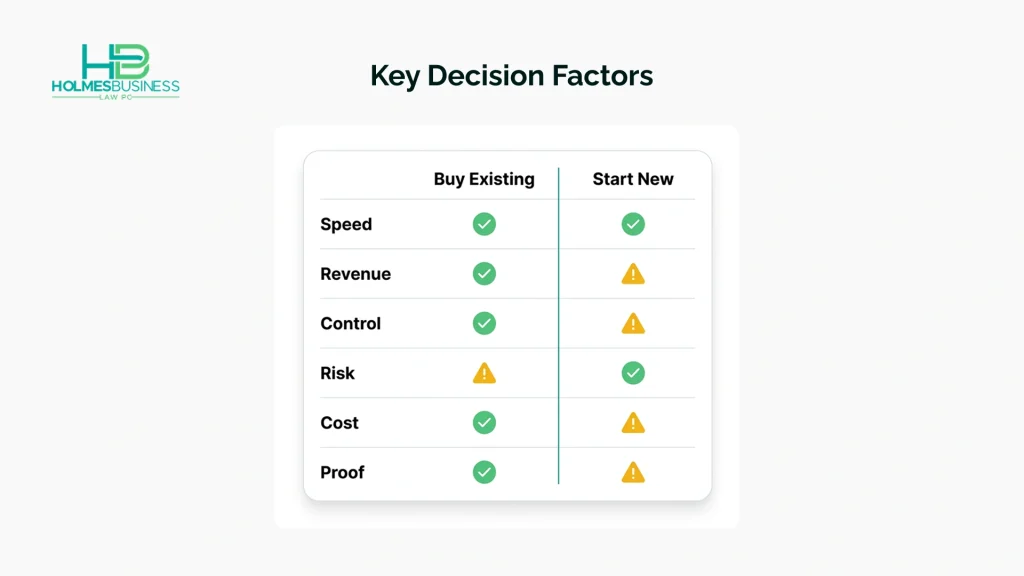
How Should You Compare the True Cost?
Use total cash required and time to stable operations.
| Decision Factor | Buy Existing | Start New |
| Upfront cost | Purchase price, fees, working capital | Formation, launch, equipment, marketing, working capital |
| Revenue | May begin immediately if transferable | Must be created |
| Control | Existing systems and constraints | High design control |
| Historical risk | Requires diligence and contract protection | Cleaner history |
| Proof of demand | Available if records are reliable | Limited before launch |
| Speed | Faster when approvals and transfers work | Depends on build and customer acquisition |
Adjust the purchase case for deferred maintenance, employee retention, new insurance, lease changes, customer loss, technology migration, inventory needs, and seller transition. Adjust the startup case for slow revenue, marketing experiments, recruitment, licensing, and founder time.
Which Deal Structure Changes the Risk?
Asset and ownership purchases distribute transfer work and historical exposure differently. In an asset purchase, the buyer identifies what it acquires and assumes. In an equity or membership purchase, the buyer acquires the entity with its operating history.
An asset purchase may require separate assignments for leases, contracts, domains, intellectual property, equipment, and permits. If more than 51 percent of a seller’s assets are transferred, Pennsylvania bulk-sale clearance requirements may apply.
An ownership purchase may preserve contracts, accounts, and licenses, but change-of-control terms can still require consent. The old entity remains responsible for its existing obligations.
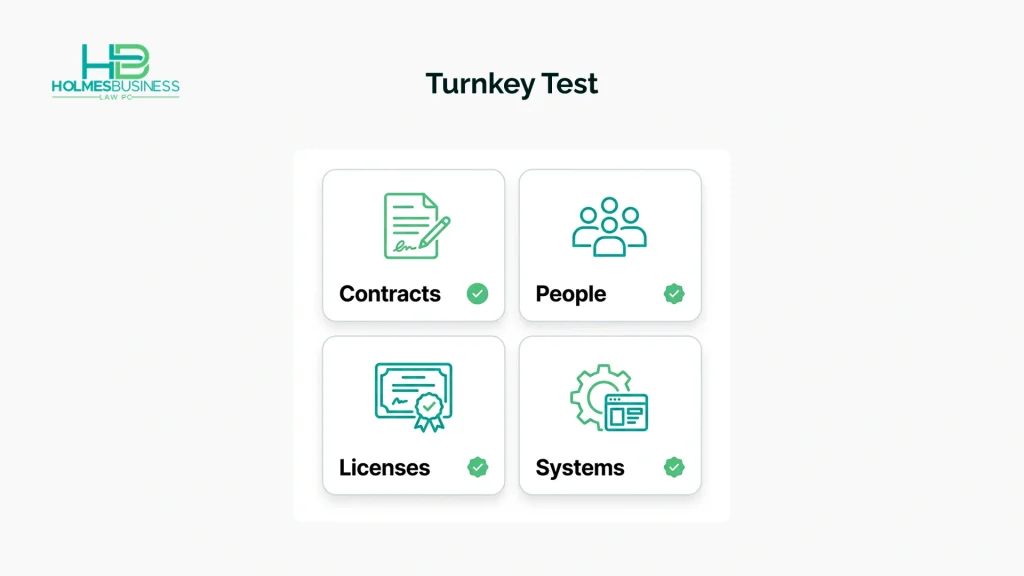
What Due Diligence Tests “Turnkey” Value?
A business is turnkey only when the buyer can legally and practically operate it after closing. Verify:
- Revenue against tax returns, bank deposits, and customer records.
- Owner add-backs and replacement compensation.
- Customer and vendor contract transfer rights.
- Lease term, assignment, rent changes, and landlord consent.
- Employee retention, wage compliance, and benefits.
- Equipment condition, title, leases, and liens.
- Taxes, litigation, insurance claims, and regulatory history.
- Trademarks, domains, software, content, and contractor assignments.
- Licenses and permits after ownership changes.
- Working capital and post-closing investment.
The Pennsylvania Department of State business services can support entity and UCC searches, but state status does not replace full diligence.

Which Choice Fits Different Buyer Goals?
Buying fits buyers who value verified speed and can manage acquisition risk. Starting fits owners who value control and can fund the ramp-up.
Buying may fit when the target has durable customers, transferable contracts, competent management, clean records, and a price supported by cash flow. Starting may fit when the market is accessible without acquisition, the buyer has a differentiated model, or the target’s value cannot survive transfer.
The decision can also be hybrid. A buyer may acquire selected equipment, inventory, brand assets, or customer contracts through an asset purchase while leaving the old entity and unwanted liabilities with the seller.
FAQs
Buying may be better for verified speed and revenue, while starting may be better for control and a clean history.
The biggest risk is paying for earnings, contracts, people, or assets that do not transfer or are burdened by undisclosed liabilities.
It can be, but financing, diligence, consents, licensing, and closing conditions may lengthen the acquisition.
Yes. A transaction can acquire selected assets or a partial ownership interest, but governance and control rights must be documented.
No. The agreement can exclude liabilities, but successor-liability rules, taxes, contracts, and transaction facts may create exposure.
A turnkey business has transferable operations, contracts, staff, systems, assets, licenses, and access that allow the buyer to continue operating.
Calculate payroll, inventory, rent, debt service, taxes, marketing, repairs, and cash-cycle needs for the transition period.
Often, but the right structure depends on liability, tax, licensing, financing, and contract considerations that should be reviewed before the LOI.
Conclusion
First identify what matters more: speed with verified operating value or control with a clean start. Then calculate the full capital and time required for both paths. If the acquisition case depends on transferable contracts, employees, licenses, or a lease, make those items diligence priorities and closing conditions. Have the structure and proposed purchase agreement reviewed before treating the seller’s “turnkey” label as fact.


