

Most small business owners hear the phrase “corporate lawyer” and picture high-rise offices serving Fortune 500 companies. The truth shows that people who need corporate counsel services can access them more easily than they think.
51% of small businesses say compliance requirements make it harder for them to grow. Small business owners in Philadelphia need simple answers to their legal questions, using common language to explain the duties of corporate lawyers, the need for legal representation, and the associated expenses.
For small business owners seeking straightforward legal support, Holmes Business Law provides accessible, outside general counsel services to growing businesses in Philadelphia. This guide provides exact answers to your questions while showing you the role of legal assistance in your company.

What Counts As a Corporate Lawyer?
The terminology can be confusing, but most discussions start in the same place. A corporate lawyer handles business law matters through his work with law formation, contract creation, transaction management, and compliance advisory services.
A business lawyer is often used interchangeably, though it may also include litigation and dispute resolution. Outside general counsel refers to an external lawyer who acts as your ongoing legal advisor, a model designed to provide consistent, long-term support.
A corporate lawyer is not just a specialist you hire once. The relationship involves ongoing work with a trusted advisor who has deep business knowledge of your company, not just individual transactions.
What Is It Like To Work With Corporate Counsel?
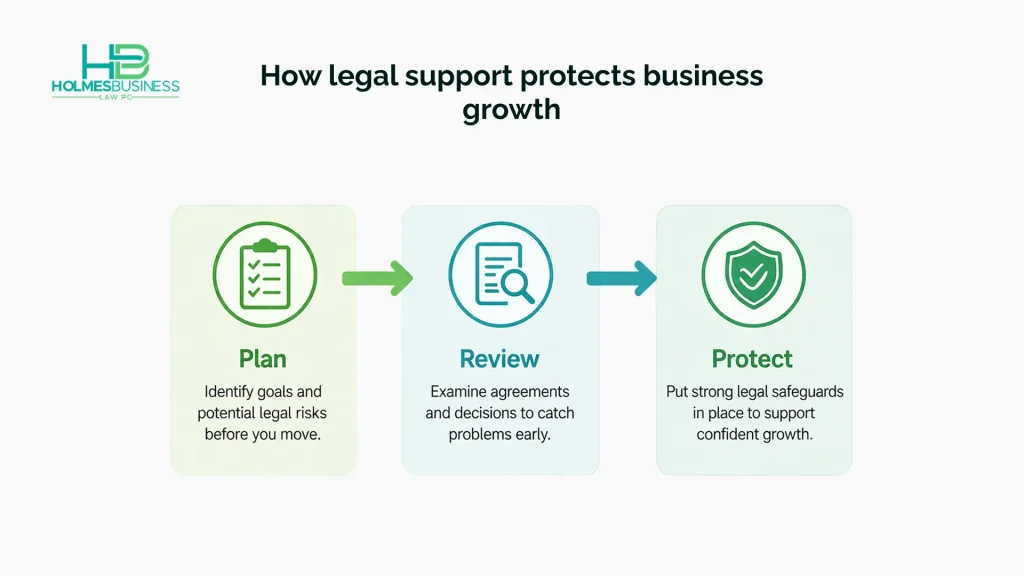
Business owners seek outside general counsel services because these services provide both legal protection and peace of mind. Your organization receives a legal partner who helps you prevent potential problems rather than waiting to solve them after they occur.
The organization reviews decisions to assess potential risks before they become serious problems, while guiding contracts and employment matters, business transactions, and compliance issues without requiring you to explain your business model again.
The relationship moves your organization from solving problems after they happen to creating a legally compliant, structured organization at every stage of business development.
Business Formation and Structure
The initial decision you need to make is selecting the correct business structure. The three business structures that you can choose from, LLC, corporation, and partnership, bring separate effects on your business operation, tax obligations, and liability protection.
A corporate lawyer ensures your foundation is set up correctly from the start, minimizing complications later. The structure you select for your business creates permanent effects that are difficult to reverse later.
The decision determines three critical aspects, including tax obligation protection against liability and your capacity to secure funding. The success of a business depends on making correct decisions from the first day of operation.
Contracts and Agreements
Every business relationship relies on contracts, which serve as both fundamental tools and requirements. Poorly written contracts lead to legal battles, causing financial harm and creating binding conditions that cannot be enforced.
Every document, from client agreements to vendor contracts, employment terms, and NDAs, needs thorough examination. Corporate counsel assists in creating, evaluating, and negotiating contracts that achieve your objectives while maintaining your legal protection.
Most businesses should begin operations by establishing a client-facing service agreement that outlines their work boundaries, business liability procedures, and establishes their fundamental business environment.
Business Purchase or Sale
Business transactions between two parties require more than a simple handshake to be completed.
The process requires businesses to conduct due diligence, including assessing their value and transferring their assets while fulfilling all their binding agreements.
A corporate lawyer ensures that transactions are structured properly and that risks are identified before deals are finalized. Buyers should begin their legal due diligence before reaching the stage of contract signing.
Sellers need to establish appropriate deal structures, as this decision affects their tax liabilities and the transaction’s total value.
Employment Law Compliance
Your organization assumes additional legal duties from the moment you start employing staff members.
- The organization needs to create employment contracts, workplace regulations, and employee dismissal procedures that comply with all relevant legal standards.
- The requirements for businesses operating in multiple states vary by state.
Corporate lawyers assist organizations by providing legal guidance to help them stay compliant, minimize risks, and establish internal operational procedures that safeguard both business operations and employee safety.
Employment law requires businesses to follow rules that vary by geographic location. You must check which regulations apply to your particular location and employee base.
Raising Capital and Investor Agreements
The process of raising capital requires businesses to establish clear pathways and organized systems that assist their fundraising efforts.
The documentation process establishes protective measures for both the business and its investors when funding is obtained through loans, equity investments, or informal arrangements.
Corporate lawyers prepare and review shareholder agreements, promissory notes, and investment contracts. The absence of a specific definition can lead to investor relationships turning into disputes that require expensive legal resolution.
Establishing your terms before negotiations begin will make the negotiations easier while securing your ownership rights and control over the matter.
Trademarks and Intellectual Property
Your brand and original content serve as assets of your business and need legal protection to secure their value.
Corporate counsel assists with trademark registration, intellectual property strategy, and dispute prevention. Without proper protection, competitors may legally use similar branding, leading to customer confusion about the products.
You can obtain trademark rights for your business operations anywhere because trademark protection exists throughout all territories.
Best practice requires businesses to register their trademarks before they begin expansion activities.
Corporate Lawyer vs. Outside General Counsel
Many businesses delay their legal support hiring because they cannot determine which model will meet their requirements.
- In-house counsel: A full-time lawyer employed by the company, typically practical only for large organizations.
- Outside general counsel: An external lawyer providing ongoing support as needed, flexible and cost-effective.
- Subscription legal model: Ongoing access to legal advice at a predictable monthly cost, avoiding hourly billing surprises.
Outside general counsel provides small businesses with optimal access to legal services while maintaining high levels of professional expertise at an affordable price.
What to Expect When Working With a Corporate Lawyer?
Business owners need clarity about the process before they can decide to proceed with their work.
Initial Consultation
The first step in our process is a discussion to assess your company’s needs, business objectives, and legal requirements. This helps determine the right level of support.
Fee Structures
- Flat fees: For defined projects like business formation or contract drafting
- Hourly billing: For complex or one-time matters
- Subscription models: Ongoing access at a predictable monthly rate
Ongoing Relationship
Corporate counsel provides its main value through the establishment of lawyer-client relationships. Your lawyer develops an in-depth understanding of your business operations, which enables him or her to shift from handling emergencies to developing strategies for prevention.
When Does a Small Business Need a Holmes Corporate Lawyer?
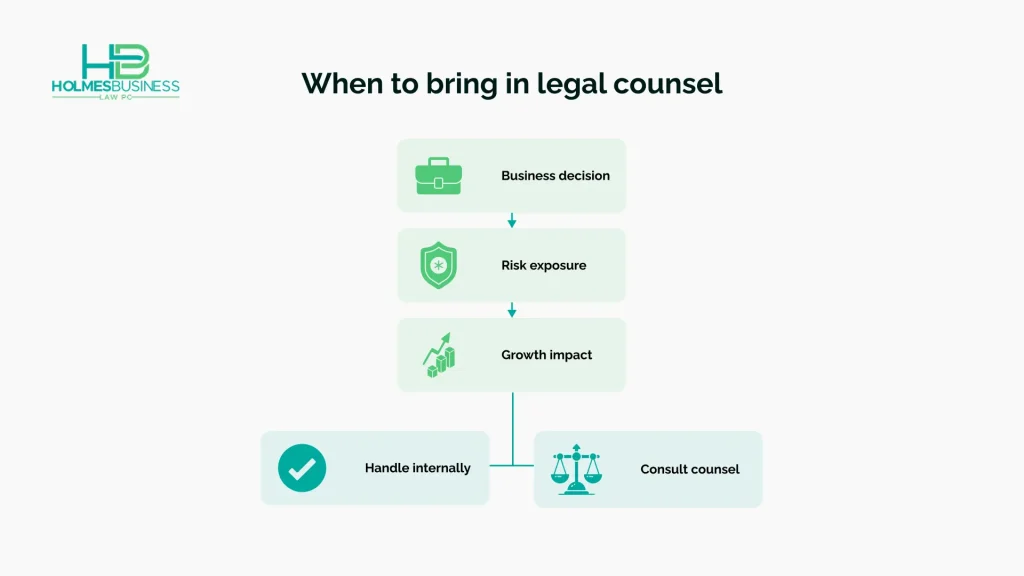
Not every decision requires legal input, but certain situations carry enough risk to justify professional guidance:
- Entering into contracts with significant financial or long-term commitments
- Buying, selling, or restructuring a business
- Bringing in partners or investors
- Signing a commercial office or retail lease
- Hiring employees and managing compliance
- Forming or changing a business entity
- Protecting intellectual property
- Facing or anticipating legal disputes
In most situations, the costs of correcting an error exceed the costs of avoiding it. Early legal guidance saves time, money, and stress.
FAQs
The terms are often used interchangeably. Corporate lawyers handle three main areas of their work: transactional work, governance activities, and advisory functions. Business lawyers can manage both legal disputes and courtroom proceedings.
Not for every decision. Legal experts provide support on complex matters, including contracts, employment matters, and business transactions, to help organizations avoid costly errors.
Costs vary by service model. The project-based work costs anywhere from several hundred dollars to multiple thousand dollars. The subscription model provides continuous assistance through a fixed monthly payment, which typically reduces total expenses.
Yes. The corporate counsel provides legal advice to organizations about employment contracts, compliance requirements, workplace regulations, and employee termination methods.
Conclusion
The process of hiring a corporate lawyer extends beyond legal protection because it shows your business dedication. Corporate counsel handles all business needs from contracts and employment law to transactions and intellectual property to create sustainable business growth.
Successful business owners dedicate their attention to important tasks, including selecting appropriate business structures, establishing solid contracts, and developing relationships with trustworthy legal advisors before any issues arise.
If you want to build your business on the right legal foundation, Holmes Business Law helps Philadelphia small business owners with entity formation, contract review, employment compliance, trademarks, and ongoing outside general counsel support. Contact us to help prevent legal issues before they disrupt your growth.
Key Takeaways:
- The corporate lawyer provides extensive legal support beyond courtroom work, including contract drafting, business formation, employment matters, business transactions, and intellectual property issues.
- The present-day small business model requires external legal support that offers flexible services and active protection of client relationships.
- Business owners should focus on three tasks: selecting the appropriate business structure, evaluating contracts before execution, and establishing brand protection measures during the initial stages.
- The cost of fixing legal problems later will exceed the cost of preventing them.
- The consultation process establishes your legal requirements while creating a foundation that supports your development.


