

Finding an attractive business for sale is only the start. To buy a business in Pennsylvania safely, you need to test the price, choose an asset or ownership-interest structure, investigate the legal and financial record, obtain required consents, and make each unresolved issue a condition to closing. The sequence matters. A buyer who signs an inflexible letter of intent or pays a deposit too early can lose negotiating room before the real risks are known.
Key Takeaways
- Decide between an asset purchase and an ownership-interest purchase before the letter of intent fixes the price and tax assumptions.
- Treat exclusivity, deposits, confidentiality, and access to records as potentially binding even when most of the letter of intent is nonbinding.
- Pennsylvania bulk-sale clearance may apply when more than 51 percent of a seller’s assets are transferred.
- A subsistence certificate confirms the entity remains on Pennsylvania records, but it does not prove clean ownership, paid taxes, or assets free of liens.
- Make lease consent, contract approvals, lender payoff letters, lien releases, and required licenses conditions to closing.
- In a qualifying asset sale, the buyer and seller generally report the purchase-price allocation on IRS Form 8594.
What Should You Decide Before Searching?
Start with acquisition criteria, not listings. Define the industries, location, price range, owner involvement, financing limits, and minimum cash flow that fit your plan. Decide whether you need a physical location, licenses, employees, recurring contracts, or transferable intellectual property.
A clear search profile prevents a common mistake: buying a business that looks affordable but depends on conditions you cannot preserve. A restaurant without an assignable lease, a contractor without transferable licenses, or an online company whose software belongs to a founder may not deliver the operation described in the listing.
Prepare a buyer entity and advisory team early. Your lawyer, accountant, lender, and valuation professional answer different questions. Holmes Law’s business acquisition service explains how legal review can begin at the letter of intent and continue through diligence, agreement negotiation, and closing.
How Do You Evaluate a Business for Sale?
Test whether earnings, assets, and transferability support the asking price. Request enough information to understand revenue concentration, owner add-backs, working capital, debt, required capital spending, and how the company earns money. A seller’s stated discretionary earnings may not reflect the cost of replacing the owner’s work or fixing deferred problems.
Before making an offer, compare tax returns, financial statements, bank activity, payroll, sales reports, and major contracts. Identify one-time income and expenses. Ask whether key customers can terminate after a sale and whether the seller owns every asset included in the price.
The business valuation process should connect price to maintainable cash flow and risk. A lower multiple does not compensate for a lease that ends next year or a customer representing most of the revenue.
What Should the Letter of Intent Cover?
The letter of intent should set commercial direction while preserving an exit if diligence changes the deal. It commonly addresses price, structure, payment terms, working capital, financing, diligence access, exclusivity, confidentiality, deposits, closing targets, and conditions.
Label binding and nonbinding provisions clearly. Exclusivity may stop you from pursuing other opportunities while the seller controls access to records. A deposit should state who holds it, when it becomes nonrefundable, and what happens if financing, diligence, or consent conditions fail.
Tie exclusivity to seller performance. The period can begin only after the seller provides an agreed diligence package. Preserve the right to change structure or price when verified facts differ from the assumptions behind the offer.
Should You Buy Assets or Ownership Interests?
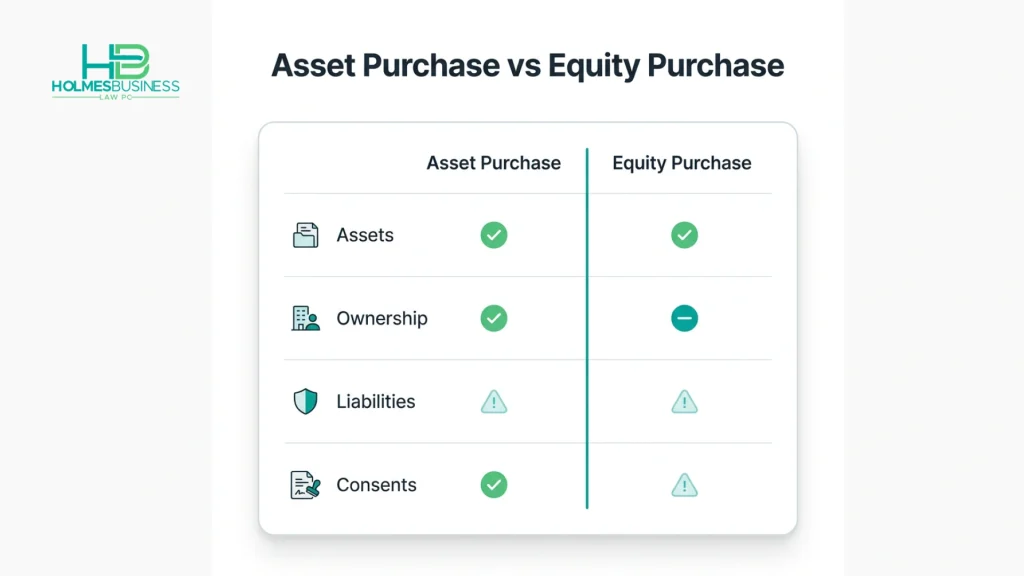
Deal structure determines what the buyer receives and which liabilities stay attached.
| Issue | Asset Purchase | Stock or Membership-Interest Purchase |
| Buyer receives | Listed assets and assumed obligations | Ownership of the existing entity |
| Historical liabilities | Often excluded by contract, subject to legal exceptions | Remain inside the acquired entity |
| Contracts and permits | Usually require assignment or new approval | May stay in place, but change-of-control terms can apply |
| Tax work | Allocation among asset classes may require Form 8594 | Tax treatment depends on entity type and elections |
| Operational setup | More transfers and new accounts may be needed | Greater continuity if approvals remain valid |
Do not choose based only on the seller’s preference. Review tax treatment with a CPA and legal exposure with counsel. The IRS Form 8594 instructions explain when a buyer and seller report an asset acquisition and allocate consideration among asset classes.
What Due Diligence Should a Pennsylvania Buyer Complete?
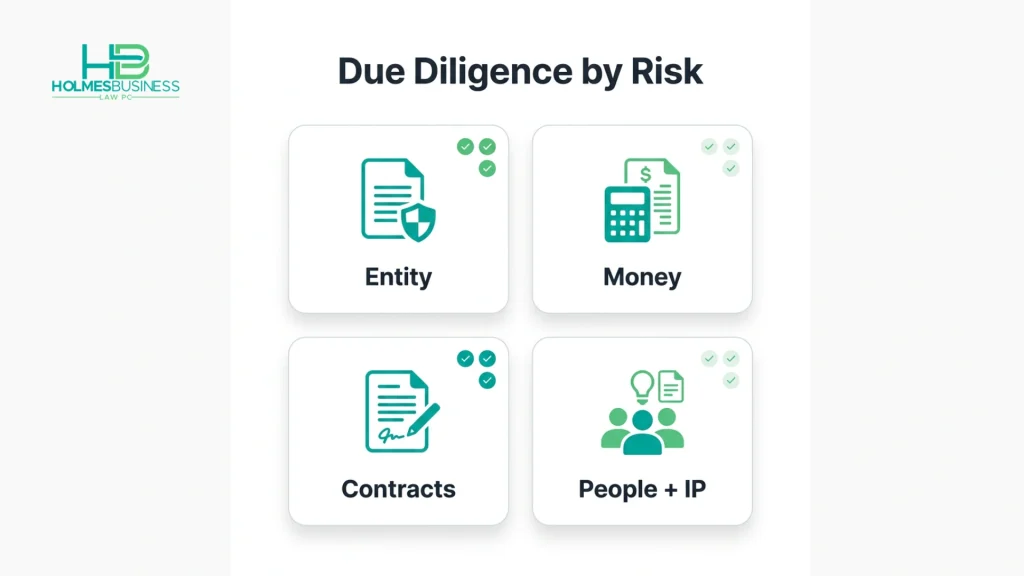
Due diligence must verify the business the buyer expects to own on the day after closing. Organize the review by failure mode rather than accepting an unstructured data room.
Ownership and Authority
Review formation documents, bylaws or operating agreement, ownership ledger, amendments, minutes, consents, options, investor rights, and authority to sell. Compare these records with tax returns and state filings.
Financial and Tax
Review returns, financial statements, general ledgers, debt, accounts receivable, inventory, payroll, sales tax, notices, audits, and related-party transactions. Confirm the working-capital amount needed to operate after closing.
Contracts and Real Estate
Read customer, vendor, software, equipment, franchise, loan, and lease agreements for assignment and change-of-control restrictions. Start landlord consent early using the Philadelphia lease-assignment guidance.
Employees, Intellectual Property, and Compliance
Review wage practices, worker classifications, benefits, claims, permits, insurance, privacy obligations, trademarks, domains, code ownership, and contractor assignments. A business should not be priced as owning an asset that a founder or third party controls.
Which Pennsylvania Clearances and Searches Matter?
State records are verification tools, not a complete risk certificate. Use the Pennsylvania Department of State’s business record, subsistence certificate, and UCC services to confirm entity records and search financing statements. Match every lien to the underlying obligation and require payoff and termination documentation.
For an asset transaction, determine whether Pennsylvania bulk-sale rules apply. The Department of Revenue states that a transfer of more than 51 percent of assets can trigger clearance requirements. Its bulk sales notice identifies REV-181 as the clearance application. The seller’s tax status and the buyer’s protection should be addressed before funds are released.
Also search litigation, judgments, tax liens, and regulatory records in relevant jurisdictions. A subsistence certificate does not confirm that the seller owns the equity, that taxes are paid, or that assets are free of security interests.
What Belongs in the Purchase Agreement?
The agreement converts diligence findings into price terms, closing conditions, and remedies. It should identify what is sold, what is excluded, which liabilities are assumed, how the price is adjusted, and what must be true at closing.
Core provisions include:
- Purchase price, deposits, escrow, holdbacks, and allocation.
- Included and excluded assets or ownership interests.
- Assumed and excluded liabilities.
- Seller representations and disclosure schedules.
- Pre-closing operating covenants.
- Conditions covering financing, consents, licenses, clearances, and releases.
- Indemnification, survival periods, caps, baskets, and setoff rights.
- Noncompetition, nonsolicitation, confidentiality, and transition support.
- Termination rights and treatment of the deposit.
The representations should match the actual risk. Generic language may not address revenue concentration, chargebacks, cybersecurity, owner-held intellectual property, or missing employee records. A purchase agreement review should consider the diligence record and closing documents together.
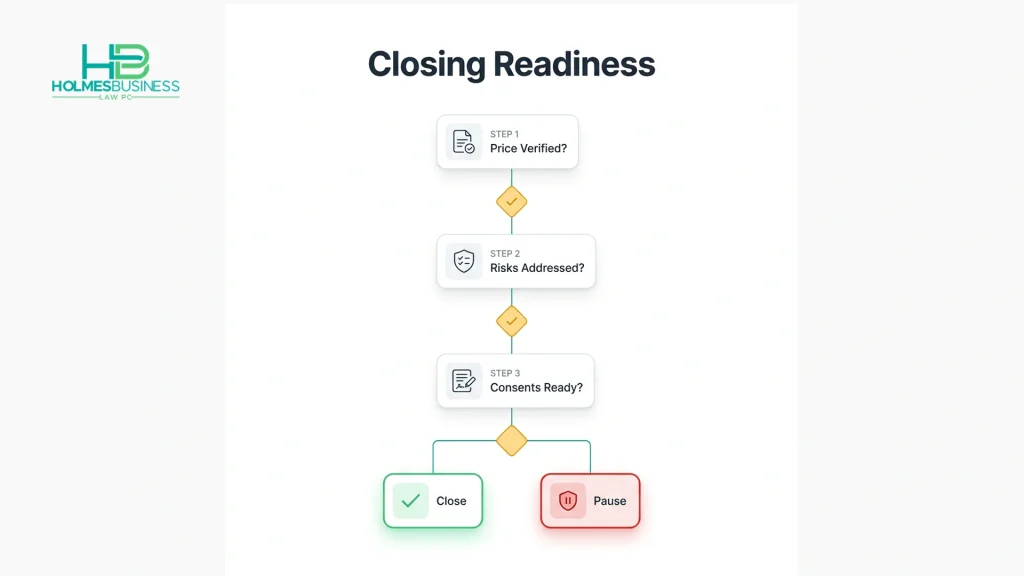
What Must Be Ready Before Closing?
Do not close until money, authority, transfers, releases, and operating access can move together. Use a closing checklist with an owner and status for every item.
Typical deliverables include the signed purchase agreement, bill of sale or equity assignment, disclosure schedules, member or board approvals, lease consent, contract assignments, intellectual-property assignments, payoff letters, UCC termination commitments, tax-clearance materials, escrow documents, promissory notes, restrictive covenants, and transition agreements.
Confirm the funds-flow statement before closing. It should show the purchase price, debt payoff, escrow, broker fees, prorations, and the amount delivered to each recipient. Do not release money on a promise that a lien or consent will be handled later unless a negotiated holdback and reliable cure process protect the buyer.
What Happens After Closing?
The buyer must secure operational control immediately after legal ownership changes. Update bank signers, insurance, payroll, accounting systems, tax accounts, vendor records, domains, email, social accounts, passwords, and physical access. Remove seller access according to the transition plan.
Calendar post-closing price adjustments, escrow claims, seller-note payments, earnout reports, license renewals, and indemnity deadlines. Confirm who files pre-closing and post-closing tax returns. If the transaction changes the entity’s responsible party, IRS Form 8822-B generally requires notice within 60 days.
The original article’s useful focus on structure, the LOI, diligence, and the purchase agreement should remain. The refresh removes outdated pandemic framing, corrects the overbroad statement that every buyer assumes every seller liability, and adds Pennsylvania clearance, lien-release, consent, closing, and post-closing mechanics.
FAQs
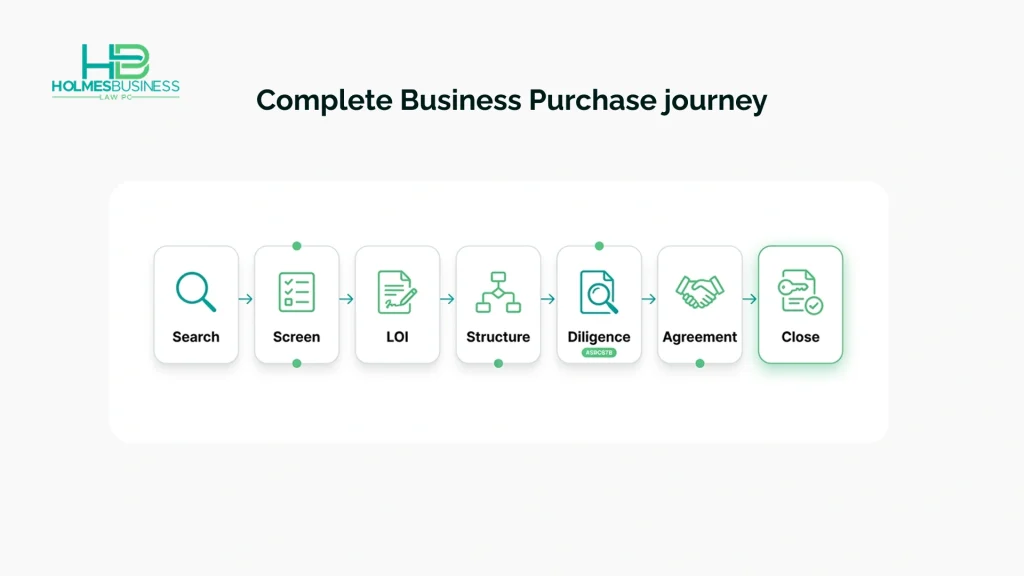
Define your criteria, value the target, sign a protected LOI, choose a structure, complete diligence, negotiate the agreement, satisfy closing conditions, and transfer control.
An asset purchase can limit assumed liabilities but requires more transfers, while an equity purchase preserves the entity and may carry broader historical exposure.
Yes. Exclusivity, confidentiality, deposits, and access provisions may bind you even when price and other deal terms are described as nonbinding.
Request entity records, tax returns, financial statements, contracts, leases, debt, employee data, licenses, insurance, intellectual property, disputes, and compliance records.
No. It confirms the entity’s status on state records but does not prove ownership, tax clearance, profitability, or assets free of liens.
It can matter when more than 51 percent of a seller’s assets are transferred, so determine applicability and timing before closing an asset purchase.
The timeline depends on financing, diligence, document negotiation, clearances, landlord or contract consent, and the seller’s readiness.
It depends on the LOI. Preserve clear termination rights and identify which provisions are binding before signing or paying a deposit.
Conclusion
The first decision is not which listing to pursue. It is what kind of business fits your resources and which deal structure protects the plan. Once a target is found, keep the sequence disciplined: verify value, protect the LOI, investigate the company, convert findings into agreement terms, and close only when releases and consents are ready. If you have an LOI, diligence package, or draft agreement, Holmes Law can review the proposed structure and documents before your negotiating position narrows.


