
Buying an LLC is not the same as buying selected equipment, contracts, and goodwill. When you purchase an LLC through its membership interests, the legal entity normally continues with its debts, claims, tax history, contracts, and operating record intact. In Pennsylvania, a signed transfer can also leave you with economic rights but no management authority if the operating agreement and member-consent rules are not satisfied. The safest process starts by choosing the right deal structure, proving who owns and can sell the interests, investigating the entity itself, and making the required approvals and releases conditions to closing.
Key Takeaways
- A Pennsylvania LLC membership-interest purchase keeps the existing entity in place, so its pre-closing liabilities remain inside the business after ownership changes.
- Under Pennsylvania law, a transfer of an economic interest alone does not automatically give the buyer management or information rights.
- The operating agreement should be reviewed before the letter of intent fixes the structure because it may restrict transfers or require member approval.
- A Pennsylvania subsistence certificate confirms that a domestic LLC exists on Department of State records, but it does not prove that the seller owns the interests free of liens.
- If the transaction is restructured as an asset purchase involving more than 51 percent of the seller’s assets, Pennsylvania bulk-sale clearance requirements may apply.
- A changed IRS responsible party must be reported on Form 8822-B within 60 days.
What Does It Mean to Purchase an LLC?
To purchase an LLC usually means buying some or all of the current owners’ membership interests. The LLC remains the same legal entity before and after closing. Its name, contracts, employees, bank accounts, permits, tax elections, and liabilities generally remain with it, subject to the terms of those documents and applicable law.
That continuity can be valuable. You may avoid transferring each operating asset separately. It also creates the central risk: the company’s old obligations do not disappear because its owner changed. A pending wage claim, unpaid tax, customer dispute, cyber incident, or contract default can continue affecting the LLC after you become its owner.
This is different from forming a new entity and having that entity buy selected assets. Holmes Law’s overview of the benefits and risks of buying an existing business explains the broader distinction. Your transaction documents should use the precise term “membership interest purchase” if that is what the parties intend.
Should You Buy the LLC or Its Assets?
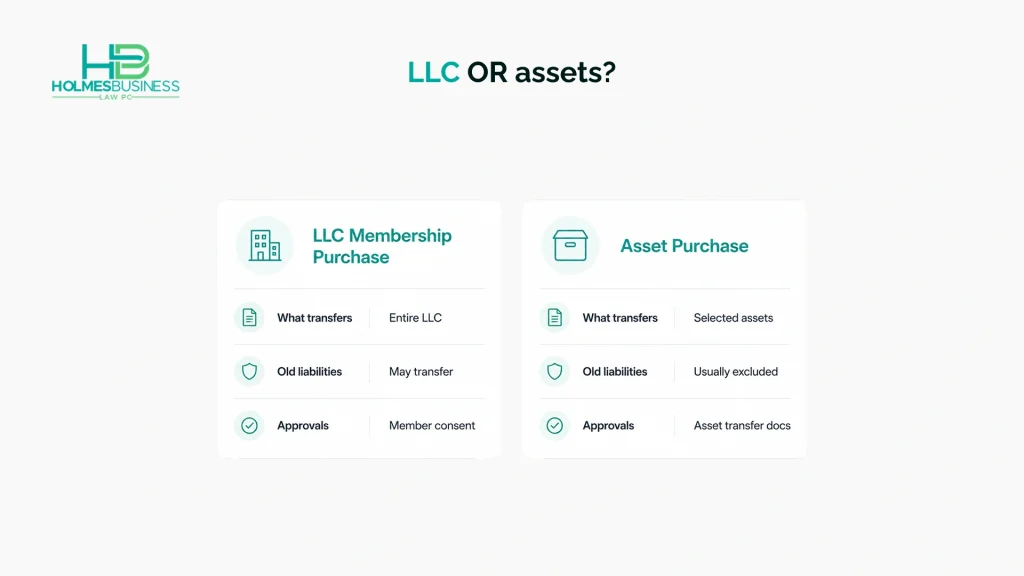
The structure decides what moves and what stays behind. A membership-interest purchase transfers ownership of the entity. An asset purchase transfers identified property and only the liabilities the buyer agrees to assume, although successor-liability rules and deal facts can create exceptions.
| Issue | Membership-Interest Purchase | Asset Purchase |
| What the buyer receives | Ownership interests in the existing LLC | Listed assets acquired by the buyer or a new buyer entity |
| Existing liabilities | Remain obligations of the acquired LLC | Usually excluded unless assumed or imposed by law |
| Contracts and permits | Stay with the LLC, but change-of-control clauses may require consent | Often require assignment, consent, or new applications |
| Tax focus | Interest basis, entity classification, and possible Section 754 issues | Purchase-price allocation and possible Form 8594 filing |
| Pennsylvania bulk sale | Usually not an asset transfer, but confirm the facts | May apply when more than 51 percent of assets are transferred |
| Operational continuity | Often easier if consents and banking remain valid | More transfers and operational setup may be required |
Do not accept the seller’s preferred structure without testing it. A seller may favor an interest sale for tax or administrative reasons, while the buyer may prefer an asset purchase to isolate old liabilities. Use the business valuation and purchase review process to connect price to the risks that stay in the entity.
How Do Pennsylvania Transfer Rules Affect the Deal?
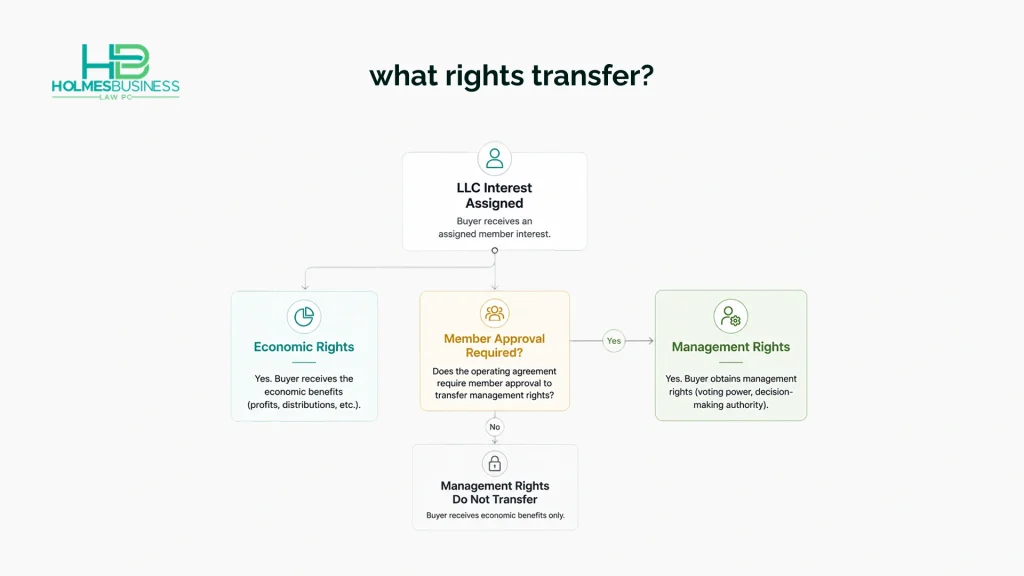
A transfer of economic rights is not necessarily an admission as a member. Pennsylvania’s LLC statute says a transferred interest can entitle the transferee to distributions without, by itself, granting management participation or access to company information. It also says a transfer that violates a known restriction in the operating agreement can be ineffective. Review 15 Pa.C.S. §§ 8841, 8851, and 8852 before treating a signed assignment as the whole closing.
After formation, a person becomes a member as provided in the operating agreement, through a qualifying entity transaction, or with the affirmative vote or consent of all members when another statutory route does not apply. That creates a practical closing sequence:
- Identify the interests being sold and every current member.
- Read the operating agreement’s transfer, right-of-first-refusal, and admission provisions.
- Obtain waivers and approvals from every required person.
- Sign the membership-interest purchase agreement and assignment.
- Admit the buyer as a member and update the ownership ledger and operating agreement.
If these steps are separated or incomplete, the buyer may pay for distributions without receiving the control expected.
What Should You Verify Before Signing an LOI?
Confirm the seller’s ownership and the proposed structure before exclusivity begins. An LOI can be mostly nonbinding while still locking in confidentiality, exclusivity, deposits, access rules, and the basic deal structure. Changing from an interest purchase to an asset purchase later can reset price, tax assumptions, financing, and consent requirements.
Request these items before or immediately after the LOI:
- Certificate of organization and every filed amendment.
- Complete operating agreement and all amendments.
- Current member ledger, capitalization table, and certificates, if any.
- Documents showing how each seller acquired the interest.
- Prior purchase, redemption, option, pledge, or investor agreements.
- Written confirmation of the percentage being sold and whether any profits interests, phantom equity, or conversion rights exist.
- A recent Pennsylvania subsistence certificate.
- Any consent, waiver, or right-of-first-refusal notice required by the operating agreement.
The Pennsylvania Department of State’s subsistence-certificate process confirms whether a domestic filing entity continues to exist on state records. It is not a substitute for reviewing internal ownership records, liens, or contractual transfer restrictions.
What Legal Due Diligence Should a Buyer Complete?
Due diligence should test the LLC’s past, present, and ability to operate after closing. A generic folder of tax returns and financial statements is not enough. Organize requests by the way a hidden problem would affect price, control, or operations.
Entity and Authority
Compare state filings, the operating agreement, member ledger, tax returns, bank resolutions, and seller representations. Inconsistent ownership percentages are a stop sign until corrected. Confirm whether the LLC is member-managed or manager-managed and who has authority to approve the sale.
Liabilities and Disputes
Review debt schedules, guaranties, lawsuits, demand letters, government inquiries, insurance claims, refunds, chargebacks, warranty obligations, and threatened disputes. Ask for a written schedule of every obligation outside ordinary monthly operations.
Employees and Contractors
Check payroll-tax filings, wage practices, worker classifications, benefits, restrictive covenants, accrued leave, employment claims, and key-person retention. Confirm which promises were made orally or through offer letters.
Intellectual Property and Data
Verify that the LLC, not a founder or contractor, owns its trademarks, domains, software, content, customer data, and social accounts. Review privacy policies, security incidents, software licenses, and data-transfer restrictions.
Holmes Law’s business acquisition legal support covers diligence, agreement negotiation, closing conditions, consents, lien releases, and transfer documents.
Which Contracts and Consents Can Delay Closing?
A contract can remain in the LLC and still require consent because ownership changed. Search every key agreement for “assignment,” “transfer,” “change of control,” “merger,” and “direct or indirect ownership.” The legal entity may remain the named party, but the counterparty may have a termination right or approval right.
Prioritize contracts that the valuation depends on:
- Commercial lease and any personal guaranty.
- Largest customer and vendor agreements.
- Loans, lines of credit, equipment leases, and security agreements.
- Software, franchise, distribution, and professional licenses.
- Government contracts and regulated permits.
- Insurance policies and claims-made coverage.
A commercial lease deserves early attention. A change of control can trigger consent even though the tenant’s legal name does not change. The Philadelphia lease-assignment and landlord-consent guide explains how consent language can become a closing condition and timeline driver.
Turn each material consent into a named closing deliverable. “Seller will use reasonable efforts” is weaker than requiring a specified written consent in a form acceptable to the buyer before funds are released.
What Tax and Lien Issues Need Review?
Tax status and lien searches should be completed before price and closing mechanics are final. Obtain federal, state, and local returns, payroll filings, sales-tax filings, notices, payment plans, examinations, and correspondence for the review period chosen with the buyer’s accountant.
Order and review:
- Pennsylvania business records and a current subsistence certificate.
- UCC searches against the LLC and the selling members under the correct legal names.
- Judgment and litigation searches in relevant jurisdictions.
- Tax-clearance evidence appropriate to the transaction.
- Payoff letters and termination commitments for secured debt.
The Pennsylvania Department of State lists business-record and UCC filing search services. A UCC search may reveal a lender’s security interest in company assets or a lien affecting a seller’s interest. Search results must be matched to loan documents and payoff conditions.
If the parties switch to an asset purchase, Pennsylvania’s bulk-sale notice and clearance rules can apply when more than 51 percent of assets are transferred. The Department of Revenue warns that the process protects purchasers from unknowingly becoming liable for a seller’s Pennsylvania tax liabilities. Confirm whether REV-181 clearance is required rather than assuming the deal label controls.
Which Documents Transfer and Protect the Ownership Interest?
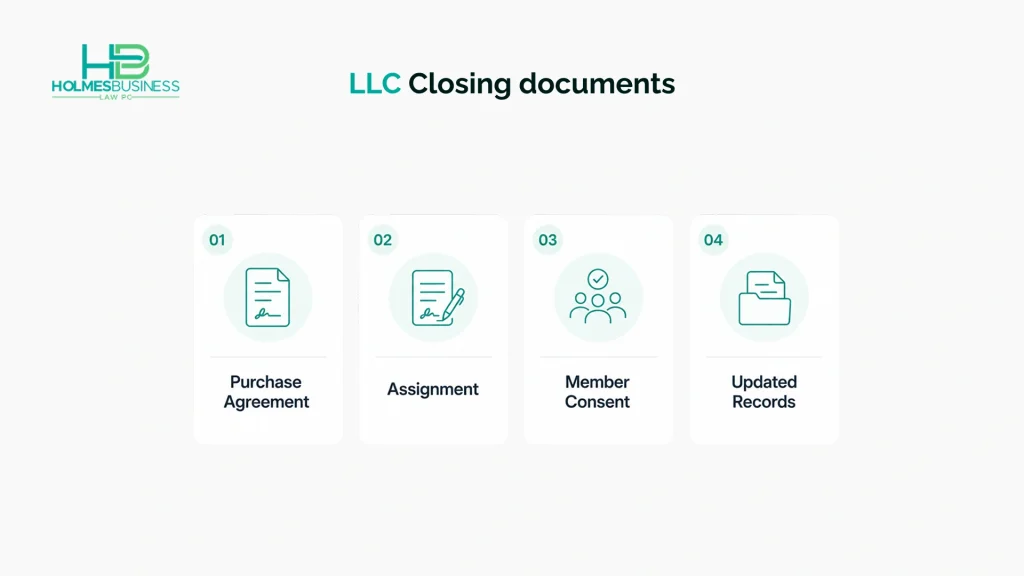
The purchase agreement allocates risk, while the closing documents prove the transfer and control change. A membership-interest purchase agreement should identify the exact percentage and class of interests, price mechanics, closing conditions, representations, indemnification, and post-closing obligations.
Common documents include:
- Membership-interest purchase agreement.
- Disclosure schedules listing exceptions to the seller’s representations.
- Assignment of membership interests.
- Member and manager consents.
- Waivers of transfer restrictions and rights of first refusal.
- Amended and restated operating agreement.
- Updated member ledger or capitalization record.
- Resignations and appointments of managers or officers.
- Payoff letters, UCC termination commitments, and lien releases.
- Third-party consents, lease documents, and permit confirmations.
- Escrow agreement, promissory note, or security agreement if part of the price is deferred.
Representations should cover ownership, authority, financial statements, taxes, contracts, employees, intellectual property, compliance, litigation, brokers, and undisclosed liabilities. Indemnification is more useful when backed by a realistic remedy such as escrow, holdback, setoff rights, or a creditworthy seller.
This is the point to have the proposed deal structure, diligence findings, and purchase agreement reviewed together. A clause cannot solve a risk the documents fail to identify.
What Should Happen at Closing and Immediately After?
Closing is complete only when ownership, authority, money, and operational control all move as planned. Do not rely on a signed purchase agreement while banking access, consents, or company records still identify the seller.
At closing, confirm the final funds flow, signatures, admission approval, updated operating agreement, member ledger, manager appointments, releases, consents, and delivery of company property. Transfer control of bank credentials, accounting systems, payroll, domains, email, social accounts, keys, records, insurance contacts, and compliance calendars.
Immediately after closing:
- Notify banks, insurers, payroll providers, tax advisers, and required counterparties.
- Update authorized signers, managers, registered-office information, and company records as applicable.
- File required state or local changes, licenses, and annual reports.
- Change passwords and remove former-owner access.
- Confirm tax return responsibility for the pre-closing and post-closing periods.
- Calendar escrow, earnout, seller-note, transition, and indemnity deadlines.
If the IRS responsible party changes, Form 8822-B must be filed within 60 days. Whether the LLC needs a new EIN depends on its tax classification and the transaction, so confirm the answer with the tax adviser rather than changing identifiers automatically.
What Red Flags Should Make You Renegotiate or Walk Away?
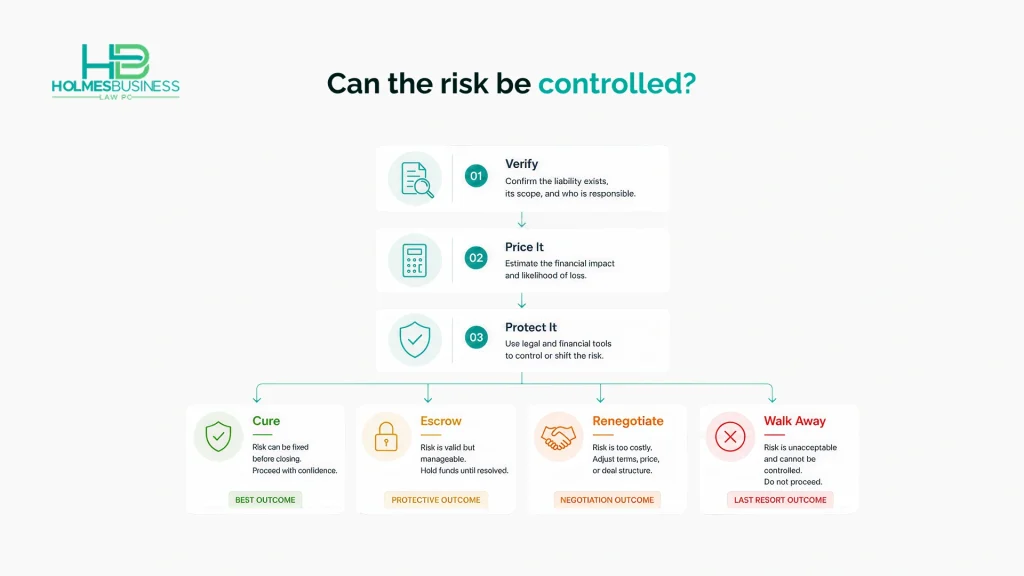
A red flag becomes a deal issue when it cannot be verified, priced, cured, or protected against. Delay alone is not always disqualifying, but repeated gaps in basic records often signal a deeper control problem.
Highest-risk findings include:
- The seller cannot reconcile the operating agreement, tax returns, and member ledger.
- A required member refuses to approve the transfer or admit the buyer.
- The interests or company assets are pledged without a reliable release path.
- Key revenue contracts can terminate after a change of control.
- Payroll, sales, or income-tax filings are missing or inconsistent.
- The business depends on intellectual property owned by a founder or contractor.
- Licenses cannot remain with the LLC after ownership changes.
- Financial statements exclude related-party expenses, refunds, or deferred obligations.
- The seller resists disclosure schedules, escrow, or a meaningful survival period.
- The lease, lender, or franchisor will not consent before closing.
Possible responses include a price reduction, specific indemnity, escrow, holdback, pre-closing cure, asset-purchase structure, delayed closing, or termination. The right response depends on whether the risk affects ownership, legal authority, operating continuity, or recoverability after closing.
FAQs
Yes, you can purchase ownership interests in an existing LLC, subject to its operating agreement, required member approvals, applicable law, and third-party restrictions.
The LLC’s existing debts remain obligations of the LLC after the ownership transfer, which can reduce its value and expose the acquired business to collection, default, or litigation.
No. Buying an LLC means acquiring ownership of the legal entity, while buying a business may instead involve purchasing selected assets through a separate buyer entity.
Not automatically. A transferee may receive only economic rights unless the operating agreement, required consents, or another statutory admission route makes the transferee a member.
Not every ownership change requires the members’ names to be filed with the Department of State, but other filings or updates may be required based on changes to managers, registered information, licenses, taxes, or annual-report details.
Yes. The agreement should identify the interests, price, closing conditions, representations, indemnification, and remedies, while related documents complete the admission and control change.
Order a subsistence certificate and review the entity’s state records, but also conduct separate ownership, lien, tax, contract, and litigation diligence.
It depends on the LLC’s federal tax classification and how the transaction changes ownership or structure. Confirm the treatment with a tax professional and update the IRS responsible party when required.
The timeline depends on diligence, financing, consents, lien releases, tax work, and document negotiation. A closing date should be tied to completed conditions rather than an optimistic calendar estimate.
Conclusion
Start by deciding whether you should buy the membership interests or selected assets. Then prove ownership and transfer authority, investigate the entity’s liabilities and operating dependencies, and convert every material issue into a closing condition, price adjustment, escrow, or clear right to walk away. Legal help becomes especially useful before the LOI fixes the structure and again when diligence findings must be translated into enforceable purchase terms.