


Do I need a lawyer for an LLC? Running a business often begins with a basic question with long-term consequences: Do you need a lawyer to form an LLC, or can you do it yourself to save money? At first, creating an LLC is straightforward. Online platforms provide fast registration, minimal documentation, and lower fees.
However, they do not focus on legal gaps that arise later. The U.S. Small Business Administration reports that about 20% of small businesses fail within the first year, and compliance and legal mistakes are the primary factors in this early-stage instability. Several founders realize, when it is too late, that creating an LLC is not just about registration. It is about reshaping your business from day one.
This is where experienced organizations like Holmes Business Law appear. Rather than managing paperwork, they help build a legally sound foundation covering operating agreements, clarity of ownership, and risk mitigation. In this blog, we will break down when you can confidently develop an LLC and when seeking help from a legal professional is not helpful but mandatory.

What Does It Mean To Form an LLC?
The limited liability company, or LLC, is a business structure in the US that provides legal safeguards against personal liability. It offers the benefits of a corporation while safeguarding your personal assets, such as your home or savings.
This means the business owners or stakeholders are not personally responsible for any business loss or risks, and the company will also bear the risk.
Do I Need an Attorney to Form an LLC?
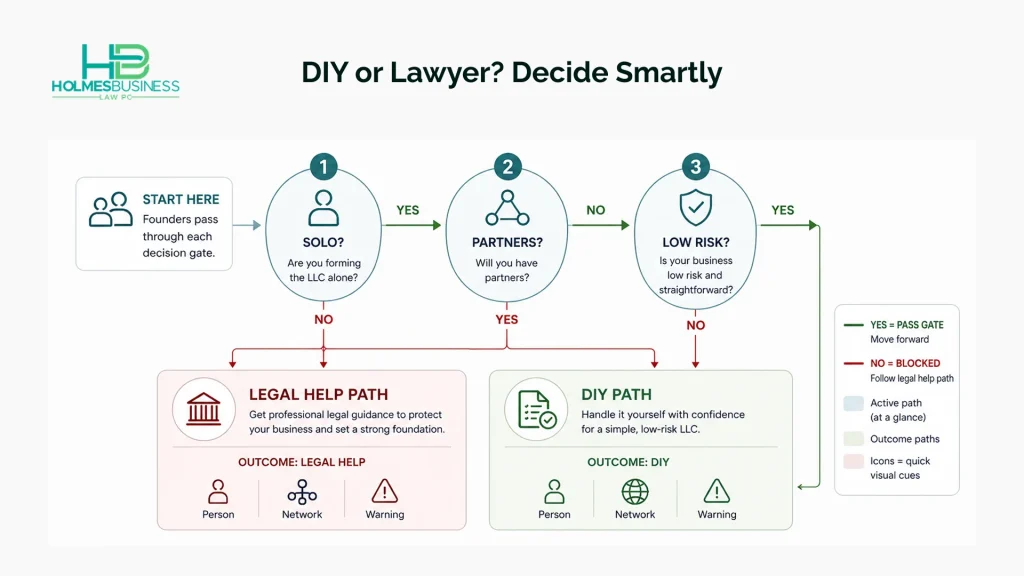
Can you form an LLC without a lawyer? Forming an LLC does not always require consulting a lawyer. If the situation is simple, you can follow the state guidelines and finish the paperwork. Let’s discuss the situation in which a lawyer isn’t needed to form an LLC.
- Single-member LLCs
If you are the sole owner, forming a corporation, LLC, or startup will be a straightforward process. You have to file your organization’s articles of incorporation with the state, create an operating agreement, and apply for an employer identification number.
- Simple business models
There are several ways to use debt to finance a business or startup. The debt instruments include promissory notes and convertible notes. It completes the process without any legal assistance. These businesses do not need complicated contracts, licenses, or investor agreements.
- Low-risk organizations
If the business works in a low-risk domain with minimal liability, you will not require an attorney. For instance, digital marketing, logistics & transportation, and e-commerce stores do not need a lawyer.
However, simple setups can benefit from structured guidance. Services, including a new business package, can help ensure nothing is overlooked during formation.

Risks Of Forming An LLC Without Legal Help
“Why should I hire a lawyer to form an LLC?” This is the most common question. Starting an entrepreneurial journey and forming an LLC can be both exciting and tedious. The risks are as follows:
- Filing errors
Mistakenly filing your articles may delay the business operations or potentially result in the state’s rejection of the LLC formation.
- Operational inaccuracies
Without a lawyer, you might miss the vital details of the employment agreement, which will lead to internal disputes or legal issues.
- Tax issues
Misunderstanding the tax issues can result in heavy penalties or audits, which will be disruptive or costly for the business.
- Lack of compliance
If you fail to manage the ongoing state-specific needs after forming an LLC, it can lead to penalties and fines, or even the potential disruption of the business.
In some cases, you don’t need to hire a legal professional, but sometimes, there are some potential risks that have serious consequences. For instance, failing to manage the formalities of an LLC can lead to your assets being targeted to fulfill the company’s debts.
When You Should Hire an LLC Lawyer?
Though the formation of an LLC is a DIY approach for some people, there are some cases when you need legal help. The expertise of a lawyer often minimizes disruption, ensures compliance, and safeguards your rights.
- Multi-member LLCs
When more than one person is involved, the situation is complex. A lawyer can help prepare a draft of an operating agreement that clearly outlines the ownership percentages, voting rights, and the process for adding or removing members.
- Complicated ownership structure
If the LLC has investors, foreign members, or various classes of ownership, legal help guarantees compliance with both state and federal regulations.
- Licensed industries
The finance, healthcare, or real estate industries often witness strict rules. A lawyer can help you to fulfill licensing, reporting, and specific operational needs for the industry.
- Legal disputes
If the LLC is facing potential conflicts or legal disputes among the members, hiring an attorney early will help you avoid significant financial issues.
How Holmes Business Law Supports LLC Formation?
Working with the appropriate legal and advisory partner provides clarity and confidence with the paperwork. Holmes Business Law represents the LLC formation as a strategic foundation, not just a procedure. It aligns with the regal structure of your operation plan, hiring, and scaling. We support the LLC formation by:
- Not all businesses are the same. The appropriate structure depends on the goals, ownership models, and plans. This guidance ensures the LLC is set up to align both the liability protection and tax considerations.
- Perfect documentation preparation is important to prevent delays or rejections. These steps also enable the business to be registered properly under state requirements.
- The consulting agreement outlines the business’s operations. This includes ownership percentage, profit distribution, and conflict resolution. A customised contract minimizes the risk of internal disputes.
- Developing an LLC is the beginning. Ongoing compliance requirements, including state filings and record keeping, must be managed to safeguard liability protection. This legal support helps ensure everything is observed.
- As the business expands, the need for legal advice also increases. Access to ongoing counsel enables the management of contracts, partnerships, and operational decisions.
This support goes beyond registration, combining legal structure and growth planning through customized service models. An LLC is often the most vital choice for new businesses because it offers flexibility in structure and doesn’t have the rigid record-keeping requirements of a corporation.
FAQs
Not always. While you can easily go into business for yourself and simply run a single enterprise, it is wise to consult legal experts regarding the long-term future of your company and establishing liability protection.
It is, but it will create holes in the chain of command, regulatory requirements,, and contracts that will come back to bite later.
Yes. For law firms with more than one owner, a lawyer is assigned roles and ownership (and conflict resolution), which is clear.
Costs vary by complexity, but many offer pay-as-you-go options tailored to your business.
If your business has growth plans, partners, or legal complexity, hiring a lawyer is often a valuable investment.
Yes, but restructuring an LLC after formation can be complex and may involve legal, tax, and administrative changes. It is easier and more cost-effective to set it up correctly from the beginning.
Without an operating agreement, your LLC will be governed by default state laws, which may not reflect your business needs. This can lead to confusion, disputes, and a lack of clarity in decision-making.
If you plan to operate in multiple states, legal guidance is highly recommended. Each state has different requirements, and improper registration can lead to penalties or compliance issues.
Conclusion
Planning an LLC is one of the most vital legal decisions a business owner makes. While you can do it yourself, the real decision comes down to your risk tolerance and long-term plans. For a simple setup, you don’t need immediate legal intervention, but if there is any complexity, the value of professional help becomes clear.
Here comes Holmes Business Law, which helps to develop a strong legal and operational foundation from the very beginning. The team supports business structuring, drafting customized agreements to ensure compliance, and preparing you for growth.
Key Takeaways:
- You can form an LLC without a lawyer in simple cases. But a straightforward setup can be beneficial from legal guidance to prevent early mistakes.
- Legal risks increase as your business grows or becomes complex. As ownership or regulations increase, small gaps become expensive issues.
- Operating agreements and structure are critical for long-term stability. A well-planned structure helps to resolve conflicts and keep decision-making clear.
- Early legal guidance can prevent costly mistakes later. Engaging a lawyer early helps you structure agreements, protect assets, and avoid compliance pitfalls that often become expensive to fix once your business grows or faces disputes.
- Treat LLC formation as a strategic decision, not just a filing task. Beyond paperwork, forming an LLC defines how your business operates, manages risk, and attracts investors. A thoughtful setup ensures clarity in ownership, governance, and long-term stability.