

Starting a business is exciting. Filing paperwork with the state is not. There are 21.6 million active LLCs in the US. This makes it the most popular small business entity.
Many Pennsylvania entrepreneurs believe forming an LLC is as simple as submitting a registration document and opening a bank account. While formation is relatively straightforward, maintaining compliance and protecting your business is where many owners run into trouble.
From missed filings and poorly drafted contracts to improper record-keeping. More such aspects can create potential legal issues that will cost you way more than the initial filing fee.
Most business owners search for an LLC Lawyer near me before launching their company. An LLC lawyer at Holmes Business Law helps you understand the applicable laws, prevent compliance errors, reduce risks, and build a stronger legal foundation for growth.
Let’s learn more about the complete Pennsylvania LLC formation and compliance checklist that consists of all the different kinds of legal requirements, common pitfalls, and some adverse situations that can be avoided by investing in an LLC lawyer.
Why Form An LLC In Pennsylvania?
A Limited Liability Company (LLC) combines the liability protection of a corporation with the operational flexibility of a sole proprietorship or partnership.
For many small business owners, consultants, contractors, e-commerce operators, and professional service providers, an LLC offers several advantages:
- Personal liability protection.
- Flexible management structures.
- Simplified taxation options.
- Enhanced business credibility.
- Easier separation of personal and business assets.
However, simply creating an LLC does not automatically protect business owners. Courts can disregard LLC protections if owners fail to follow legal requirements or maintain proper separation between personal and business activities.
Pennsylvania LLC Formation Checklist
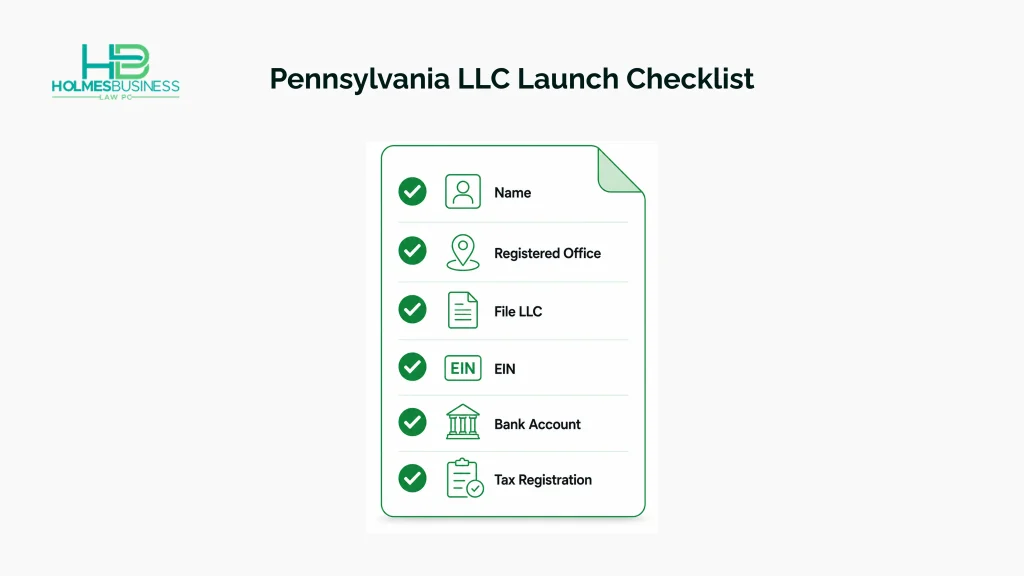
- Choose A Business Name
Your LLC name must be distinguishable from other registered entities in Pennsylvania. Before filing formation documents, conduct a business name search through the Pennsylvania Department of State to confirm availability.
A strong business name should:
- Be legally available.
- Reflect your brand identity.
- Avoid trademark conflicts.
- Support future growth plans.
An LLC Lawyer can also help evaluate potential trademark issues before making significant investments in branding.
- Designate A Registered Office
Pennsylvania requires LLCs to maintain a registered office where legal notices and government correspondence can be received.
This address becomes part of the public record and must remain current. Failing to maintain an accurate registered office can result in missed legal notices and compliance issues.
- File The Certificate Of Organization
The Certificate of Organization officially creates your LLC with the Pennsylvania Department of State. This filing establishes the company’s legal existence and basic organizational structure.
Errors during this stage can create administrative delays or require corrective filings later.
- Obtain An EIN
An Employer Identification Number (EIN) is issued by the Internal Revenue Service.
Most LLCs need an EIN to:
- Open business bank accounts.
- Hire employees.
- File tax returns.
- Establish business credit.
Even single-member LLCs often benefit from obtaining an EIN for operational purposes.
- Open A Business Bank Account
One of the fastest ways to undermine LLC liability protection is by mixing personal and business finances.
Separate business accounts help:
- Maintain liability protection.
- Simplify bookkeeping.
- Support tax compliance.
- Create cleaner financial records.
- Register For Applicable Taxes
Depending on your business activities, additional registrations may be required.
Examples include:
- Sales tax registration.
- Employer withholding accounts.
- Local tax obligations.
- Industry-specific licensing requirements.
A legal and tax review during formation can help identify these obligations early.
Which Are The Legal Documents Every LLC Needs?
Many business owners focus solely on formation paperwork while overlooking critical legal documents.
- Operating Agreement
Pennsylvania does not require every LLC to submit an operating agreement to the state. However, every LLC should have one.
An operating agreement establishes:
- Ownership percentages.
- Member responsibilities.
- Voting rights.
- Profit distribution methods.
- Procedures for disputes.
- Exit strategies.
Without a well-drafted agreement, disagreements among members can quickly become costly legal disputes.
- Member Agreements
When multiple owners are involved, additional agreements may address:
- Buyout provisions.
- Non-compete restrictions.
- Intellectual property ownership.
- Succession planning.
- Employment Agreements
Businesses with employees should establish clear employment documentation to define expectations and reduce legal exposure.
- Vendor And Service Contracts
Many small businesses rely on vendors, suppliers, freelancers, and contractors.
Proper contracts help define:
- Payment obligations.
- Deliverables.
- Deadlines.
- Confidentiality requirements.
- Dispute resolution procedures.
Strong contracts with vendors and service providers can prevent misunderstandings before they become expensive disputes.
What Are Pennsylvania LLC’s Compliance Requirements?
Forming an LLC is only the beginning. Ongoing compliance helps preserve liability protection and maintain good standing with the state.
- File Annual Reports
Pennsylvania implemented a new Annual Report requirement beginning in 2025. Domestic and foreign LLCs must submit annual reports and maintain current business information with the state.
The filing deadline for LLCs runs through September 30 each year. Failure to file may eventually result in administrative dissolution and loss of name protection.
- Maintain Accurate Business Records
Good recordkeeping should include:
- Organizational documents.
- Tax filings.
- Member resolutions.
- Financial statements.
- Major contracts.
- Compliance records.
These records can become critical if legal disputes arise.
- Keep Registered Office Information Updated
If your registered office changes, Pennsylvania requires an update to its state records. Ignoring address changes can result in missed legal notices and compliance complications.
- Maintain Tax Compliance
LLCs must comply with applicable federal, state, and local tax requirements.
Tax obligations vary depending on:
- Ownership structure.
- Industry.
- Revenue sources.
- Employee status.
Working closely with legal and accounting professionals helps reduce compliance risks.
- Review Contracts Regularly
Business relationships evolve over time. Contracts that worked when the company launched may no longer adequately protect the business several years later. Periodic contract reviews can identify outdated terms and emerging risks.
What Are The Common LLC Compliance Mistakes?

Many business owners unintentionally create legal vulnerabilities through avoidable mistakes.
- Mixing Personal And Business Finances
Using personal accounts for business expenses can weaken liability protection and complicate financial reporting.
- Operating Without Written Agreements
Verbal agreements often lead to disputes because parties remember conversations differently. Written agreements create clarity and enforceability.
- Missing Filing Deadlines
Missed compliance deadlines can result in penalties, loss of good standing, and administrative complications.
- Using Generic Online Templates
Many online legal templates fail to address industry-specific risks or Pennsylvania legal requirements.
- Ignoring Contract Reviews
Businesses frequently sign agreements without fully understanding:
- Indemnification provisions.
- Automatic renewal clauses.
- Limitation of liability terms.
- Dispute resolution requirements.
These provisions can significantly affect future legal rights.
When To Hire An LLC Lawyer?
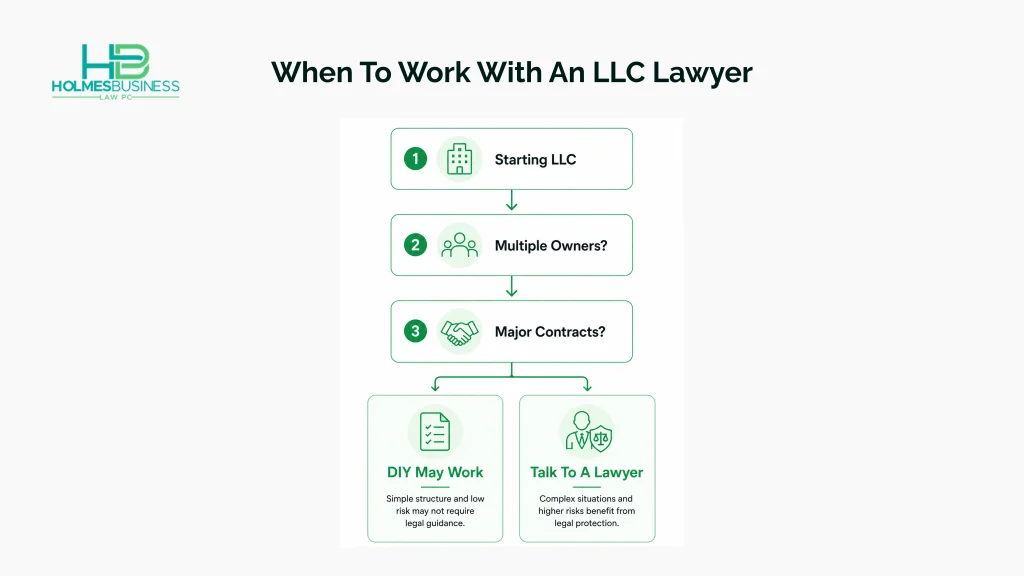
Not every business owner requires ongoing legal representation from day one. However, there are several situations where legal guidance can provide substantial value.
- During Formation
An LLC Lawyer can help:
- Structure ownership properly.
- Draft operating agreements.
- Identify compliance obligations.
- Address liability concerns.
- Evaluate growth plans.
- When Multiple Owners Are Involved
Partnership disputes often stem from poorly drafted ownership agreements. Legal guidance helps create clear expectations before disagreements occur.
- Before Signing Major Contracts
Contract review is often far less expensive than resolving a contract dispute. An attorney can identify risks that may not be obvious to business owners.
- During Business Expansion
Growth often creates new legal considerations involving:
- Employees.
- Vendors.
- Financing.
- Intellectual property.
- Additional locations.
Proactive legal support helps businesses navigate these transitions.
How Holmes’ Business Contracts Protect Pennsylvania LLCs?
Many entrepreneurs focus only on forming LLCs and end up overlooking the contracts. Your contracts play a massive role here. At Holmes Business Law, contract issues can be easily addressed prior to signing them with the right strategies. The goal is to identify any unclear language, outdated provisions, or one-sided agreements that may pose a threat to your business in the long run.
Here’s how an LLC lawyer can help your business:
- Helps to clearly define the rights, responsibilities, and expectations for both parties. This reduces potential confusion and builds a stronger foundation for successful businesses.
- Helps establish the right payment terms, billing schedules, late-payment remedies, and collection procedures to improve overall cash flow and minimize financial disputes.
- They help to protect confidential business information, trade secrets, or any proprietary processes that may contribute to the company’s competitive advantage.
- Allocates risk between the parties by addressing liability limitations, indemnification provisions, and responsibilities for potential losses or damages to your business.
- Sets clear procedures that resolve disputes through negotiation, mediation, arbitration, or even litigation.
As your business grows further, contracts become more important than ever. Starting from vendor agreements and service contracts to employment agreements and commercial transactions. Legal protection from Holmes Business Law is extremely crucial. It can safeguard your business and drive long-term success.
FAQs
Not really. In Pennsylvania, you can form an LLC on your own. Still, having some legal guidance can help you dodge small filing mistakes, and it can also support stronger protections for your business or your plan in general.
It depends on a few things, like state filing fees, registered office setup, whether you pay for a service, and any legal help you bring in. There can be extra compliance items, too, so costs aren’t always the same.
Technically, it might not be required just to file the paperwork. But, it’s strongly recommended to have a written operating agreement anyway, mostly for better liability protection and clearer governance, so you’re not stuck later arguing about roles and money.
If you don’t file on time, the LLC can face administrative steps down the road. That can include losing good standing and, in some situations, even lead to dissolution. So, it’s not something to ignore, even if it feels minor.
Usually, yes. An LLC can help shield personal assets from certain business liabilities. But protection can weaken if you don’t follow proper business practices, or if personal and business activities mix too much, like using the same accounts loosely and treating the LLC as if it’s not its own thing.
Contracts set clear expectations, define who owns what risk, and help prevent messy disagreements. They’re basically a core tool for protecting day-to-day operations and handling disputes without everything turning into chaos.
Many owners hire an LLC lawyer at formation, when ownership changes, or when contract negotiations become serious. It’s also helpful for financing deals, restructuring, or any major growth moves where the stakes go up, and where you don’t want avoidable mistakes hanging around.
Conclusion
Forming an LLC in Pennsylvania is exceptionally easy. But with the right guidance in maintaining compliance, you can protect your business with a much more strategic approach,
The strongest LLCs depend on proper governance, clear agreements, strong contracts, ongoing compliance, and proactive legal planning. This is why businesses tend to rely on LLC Lawyers like Holmes Business Law who can identify potential risks way before they become expensive problems.
Key Takeaways
- Forming an LLC is only the first step. Long-term protection really comes down to staying in compliance and consistently using the right business practices.
- For Pennsylvania LLCs, there’s a new requirement now: annual reports must be filed, starting with the 2025 reporting cycle. If you miss the required filings, it can put your good standing with the state at risk, not just cause a small delay.
- An operating agreement helps a lot with clarity, like ownership rules, how management works, and even what happens if there’s a disagreement. Even a single-member LLC can still get real value from having one; you don’t need a huge team for that.
- Contracts are also a major piece in protecting how the business runs. Solid contracts reduce ambiguity and help prevent avoidable disputes that eat up time.
- Getting legal guidance during formation and as you grow can help businesses avoid costly mistakes. Planning ahead is often much cheaper than dealing with reactive litigation later on.


